Start now
Now

AEC helps eligible schools prepare and submit Condition Improvement Fund applications for essential estate works. From surveys and technical evidence to project costs and the final bid, we manage the process from start to finish on a no funding, no fee basis.
The 2027-28 window is expected to open in October 2026, with submissions due around mid-December and outcomes in May 2027.
Talk to our education team about your estate, the project you are considering and whether it could be suitable for the next funding round.
No obligation. No upfront bid-writing fee.






The Condition Improvement Fund, or CIF, is an annual capital funding programme run by the Department for Education. It is designed to help eligible schools address significant building condition, safety and compliance issues where investment is needed to protect the school estate.
Funding is awarded through a competitive application process. Schools therefore need to show not only that work is required, but that the project has been properly investigated, costed and supported by evidence.
That is where AEC can help. We combine estate consultancy and project expertise with practical experience of preparing CIF applications, helping schools turn genuine building needs into well-supported funding cases.
And because we work on a no funding, no fee basis, there is no upfront consultancy fee for preparing your CIF application.
CIF is available to eligible standalone academies, small multi-academy trusts, voluntary aided schools and sixth form colleges. Larger trusts generally receive School Condition Allocation instead.
If you are unsure which route applies to your organisation, we can help establish your eligibility before you begin preparing a bid.
Independent academies may be able to apply for CIF funding for qualifying estate projects.
Trusts with fewer than five schools or fewer than 3,000 pupils may be eligible to apply.
Eligible voluntary aided schools and bodies meeting the relevant size criteria may also qualify.
Eligible sixth form colleges can apply for funding towards qualifying condition projects.
Each applicant can submit up to two projects, so choosing the right two matters as much as writing them well.
Larger academy trusts generally receive School Condition Allocation funding instead of bidding.
A strong CIF bid takes several months of surveys, evidence and costed design work. We do all of it for you, and you only pay if the funding comes through.
Our surveyors review your priority issues and identify the project most likely to score with the DfE.
We carry out the condition surveys and investigations the assessors expect to see.
Designs are developed and costings and timings settled, so the bid is deliverable as submitted.
We write the application to the DfE criteria and submit it through the portal before the deadline.
If funded, we take on contract administration and project management, keeping delivery to plan and the DfE informed.
If a bid misses out, we review the feedback and build the strongest case for the next round.
CIF primarily supports projects addressing serious building condition, safety and compliance issues. That can include roofing, heating, electrical systems, fire safety, drainage, structural defects and other essential estate works.
The strength of the evidence behind the project is just as important as the type of work itself.
Roof repairs and replacement, structural repairs and teaching blocks beyond economic repair.
Heating and boiler upgrades, ventilation and gas safety improvements, often with lower running costs.
Fire safety improvements, compartmentation and electrical works that bring buildings up to standard.
Drainage and water distribution works that remove a risk to the building or the people in it.
Window and door replacement and building fabric improvements, including safeguarding and security.
Asbestos-related works and other essential health, safety and compliance projects.
A strong application clearly demonstrates the problem, the proposed solution and the evidence supporting it. That often means bringing together condition surveys, technical reports, project costs, photographs and a clear scope of works.
AEC develops the project and the application together, so the final bid is supported by a credible technical case. Most of the reasons bids fail are avoidable.
Bidding for what the school wants rather than what the evidence supports. Assessors fund need.
Condition claims without surveys, photographs and expert reports behind them score poorly.
Costings that are too low or too vague undermine the assessors’ confidence in delivery.
Overlooking the two-project limit or the technical adviser procurement requirement can rule a bid out.
A strong bid takes several months of preparation. Starting when the window opens leaves too little time.
Assessors look for a credible programme and project management from award to completion.
Once a project is approved, it still needs to be procured, managed and delivered correctly.
AEC can continue supporting your school through contract administration, project management and delivery, giving you continuity from the original application through to completion.
We run the tender process so the right contractor is appointed on terms that match the funded project.
Project management keeps the programme, budget and risks under control from appointment to handover.
Contract administration covers the building contract, from valuations and variations through to completion.
We support your duties under the CDM Regulations while the works are on site.
We keep the Department for Education informed of progress through to completion.
The team that developed your bid delivers it, so the work on site matches the project that was funded.
The Condition Improvement Fund gives eligible schools access to capital funding for essential building repairs, compliance works and estate improvements. But securing that funding takes more than identifying a problem.
A strong CIF application needs clear technical evidence, a well-developed project, realistic costs and a convincing case for why the work should be prioritised.
AEC supports schools through the full process. For schools with limited internal estates resource, that means one experienced team can take the project from an initial building concern through to a fully developed funding bid.
CIF is primarily intended for projects that address condition, safety, compliance and significant estate risk, including:
The important point is that CIF is not awarded simply because a school wants to improve a building. The application needs to demonstrate a genuine need, supported by appropriate technical evidence.
AEC helps schools establish that evidence and develop the project before the bid is submitted.

There is no upfront fee for AEC to prepare your CIF application.
If your bid is successful, our professional fees are covered as part of the funded project. If your application is unsuccessful, you do not pay us for preparing the bid.
That means your school can access specialist CIF support without committing an existing budget to the application process.

The next Condition Improvement Fund application window is expected to open in October 2026, with submissions due around mid-December and outcomes expected in May 2027. The Department for Education has not yet published the confirmed dates for the 2027-28 round, so these timings remain provisional.
If your school is considering a bid, preparation should begin before the window opens. Successful applications rely on evidence that often takes time to gather, including surveys, project development, cost planning and technical information. Starting early gives your school more time to build a stronger case and resolve any gaps before the deadline.
Start now
Now
Expected
Oct 2026
Expected
Oct–Dec 2026
Expected
Mid-Dec 2026
Expected
Jan–Apr 2027
Expected
May 2027
Expected
Jun–Jul 2027
Expected
Autumn 2028
1 of 8: Prepare your project
Our funding consulting team tracks every round date, so your bid is surveyed, costed and ready before the window opens. Talk to a funding consultant
CIF bids sit at the intersection of funding, construction and estate management.
This matters because a convincing application cannot rely on good writing alone. It needs to be underpinned by a project that has been properly investigated, scoped and costed.
AEC brings those disciplines together. Our education team understands school estates, building condition and project delivery, while also having experience of preparing CIF applications.
It means the evidence supporting the bid and the application itself are developed as one piece of work rather than being passed between disconnected consultants.
For schools and small trusts with limited estates resources, that can make the process significantly easier to manage.
The Condition Improvement Fund is an annual capital funding programme run by the Department for Education. It helps eligible schools fund important works relating to building condition, health and safety and statutory compliance. Funding is competitive, so schools need to submit evidence showing why the project is necessary, what work is proposed and how the project has been developed. AEC helps schools prepare this evidence and brings it together into a complete CIF application.
Book a free CIF consultation to talk through your project.
CIF is mainly available to standalone academies, smaller multi-academy trusts, qualifying voluntary aided schools and sixth form colleges. For MATs, the current eligibility threshold generally applies to trusts with fewer than five schools or fewer than 3,000 pupils. Larger trusts normally receive School Condition Allocation funding instead. Eligibility should always be checked against the Department for Education guidance for the relevant funding round.
Check your CIF eligibility with our team before you start a bid.
The next CIF application window is expected to open in October 2026, with a submission deadline around mid-December and outcomes expected in May 2027. These dates have not yet been formally confirmed by the Department for Education. Schools can start preparing before the portal opens, and doing so usually gives more time to gather the surveys, evidence and costs needed to support the application.
Book a free CIF consultation to start preparing now.
AEC prepares CIF applications on a no funding, no fee basis. There is no upfront consultancy fee for preparing the bid. If your application is successful, our professional fees are covered within the funded project. If the bid is unsuccessful, you do not pay us for preparing the application.
Book a free CIF consultation: no obligation and no upfront bid-writing fee.
CIF commonly supports essential works relating to roofing, heating, electrical systems, fire safety, drainage, structural defects and other significant building condition or compliance issues. The type of project alone does not determine whether an application will succeed. The bid also needs to demonstrate the severity of the issue and provide appropriate evidence to support the proposed solution.
Discuss your project with our team to see whether it is a strong fit.
Preparing a strong CIF application can take several months. Before the final bid is written, the project may require surveys, technical reports, cost planning, photographs and other supporting evidence. Starting before the formal application window opens gives your school more time to strengthen the project and address any gaps before the submission deadline.
Book a free CIF consultation to plan your timeline.
Our work is built around giving school leaders and estates teams clear advice, practical support and confidence throughout the project.
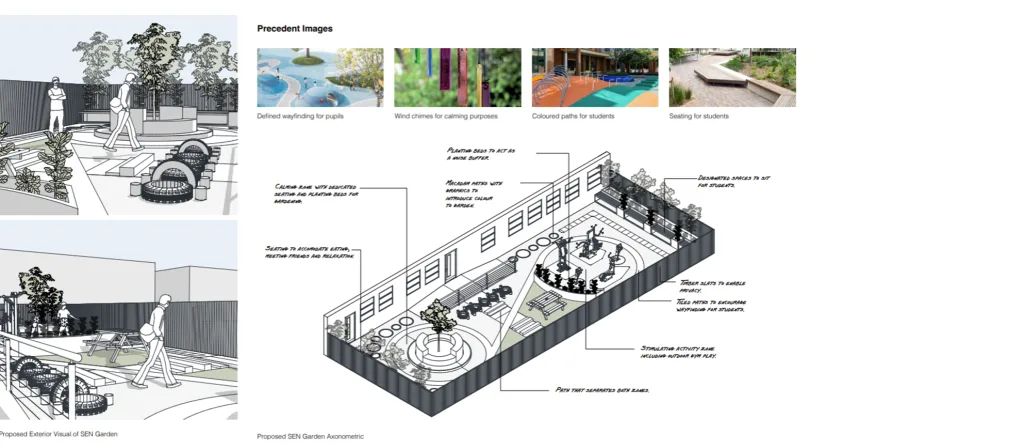
We have had an excellent experience working with AEC. Their support in drawing up comprehensive plans and costings for a new SEN centre on our campus has been invaluable. Their expert advice has enabled us to navigate complex regulations with confidence, and we have found them extremely responsive and adaptable during our many back-and-forth discussions. We couldn't be happier with their service.

AEC has provided us with high quality support during each stage of our project. A collaborative, patient approach was taken with our stakeholders which helped to ensure that the designs of our space were able to evolve to support our overall vision. Communication has been clear throughout the project and we have felt that AEC have acted in our best interests at each and every stage of the project.

AEC have been nothing short of exceptional in supporting the school through the disruption that comes with (multiple) roof changes, including those imposed externally at short notice. They offered our team full reassurance that complex, and potentially dangerous projects were well thought through, managed to time (in some cases ahead of time) and safe. I cannot recommend them highly enough.
See how AEC helps education clients turn essential estate projects into clearly evidenced funding applications and, where successful, take those projects through to delivery.

Explore our latest advice on CIF eligibility, application deadlines, funding updates and preparing stronger bids.
Competition for Condition Improvement Fund (CIF) funding remains high, and a well written application on its own won't secure it. Academy trusts need to begin with the decisions that come before the bid itself.

At a time when Condition Improvement Fund (CIF) allocations have reduced, AEC is delighted to confirm that we secured more than £100 million in capital funding for our clients in the latest 26/27 funding round.
As the Condition Improvement Fund (CIF) programme enters its final years, education leaders across the country are preparing applications for what is widely believed to be the penultimate bidding round. Yet a closer examination of the funding landscape suggests that many cash constrained schools may be underselling their capital needs and, as a result, missing out on the level of investment they genuinely require.
If your school has a building issue or improvement project that may be suitable for CIF funding, it is worth starting the conversation early. We can help you understand:
No obligation. No upfront bid-writing fee.